
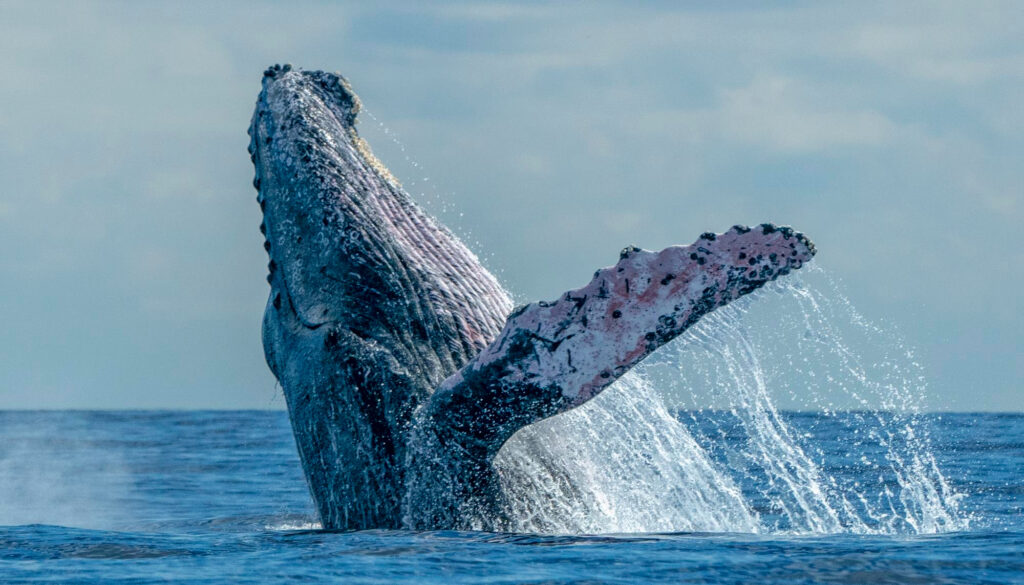
From June to November, the Garden Route coastline becomes an important corridor for migratory marine life. As the Indian Ocean cools, visitors have a rare chance to see some of the world’s largest mammals in their natural environment.
For this reason, winter is one of the best seasons for a marine excursion in Knysna.
The Seasonal Migration: Humpbacks and Southern Rights
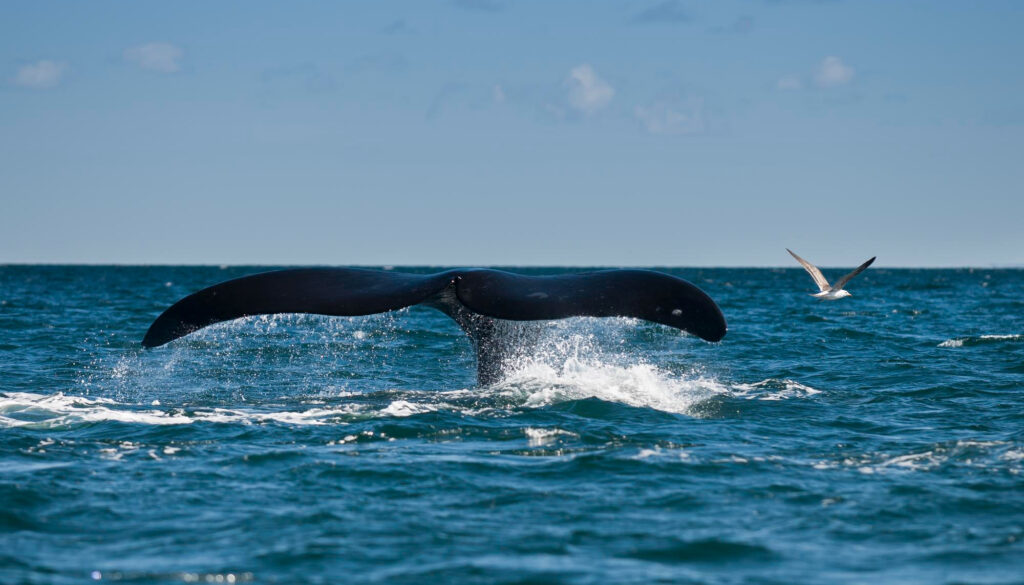
The main visitors during this season are Southern Right and Humpback whales.
Visitors often spot Southern Rights in the sheltered bays of the South Coast, where they come to mate and calve. They are easy to recognise by the callosities on their heads and the absence of a dorsal fin. If you are patient, you may also see them “sailing”, a behaviour where they lift their tails into the air to catch the breeze.
Humpback whales also move past Knysna during winter. They travel along the coast on their journey to the warmer waters of Mozambique. These 30-tonne mammals are known for evocative songs and dramatic lunges, and they are a remarkable sight.
While boat-based tours offer the closest perspective, the elevated viewpoints at the East Head are also worth visiting. From there, you may spot a distant blow or a fluke breaking the surface against the deep blue of the winter sea.
Knysna’s Year-Round Residents
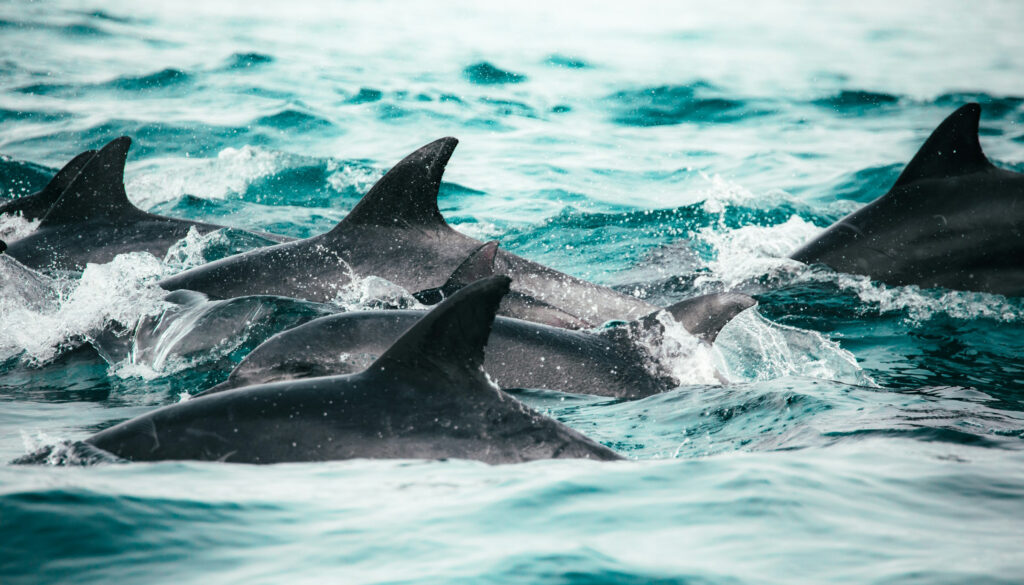
While the whales are seasonal visitors, Knysna’s marine ecosystem is active throughout the year.
The waters around the Heads are home to three species of dolphins: the Common dolphin, the Bottlenose dolphin, and the endangered Indo-Pacific Humpback dolphin. The latter tends to stay in smaller groups closer to the shore.
In addition, visitors often see Cape Fur Seals at the base of the cliffs. You may spot them basking on the rocks or moving through the strong currents of the channel.
The winter months also bring a variety of pelagic birds closer to the coastline. These include albatrosses and petrels, which follow the nutrient-rich cold-water currents.
Ethical Marine Encounters
To appreciate the true scale of these animals, a boat-based tour is one of the most immersive options. In Knysna, these excursions also offer a unique view of the coastline, as boats travel through the Heads and into the open sea.
However, it is important to choose a responsible operator. Look for a company with a Permitted Close Encounter Whale Watching licence.
Authorities strictly manage these permits to protect the animals. They allow boats to approach whales within regulated limits, while keeping the encounter respectful and unobtrusive. As a result, the whales are able to move and interact on their own terms.
The Milkwood Perspective
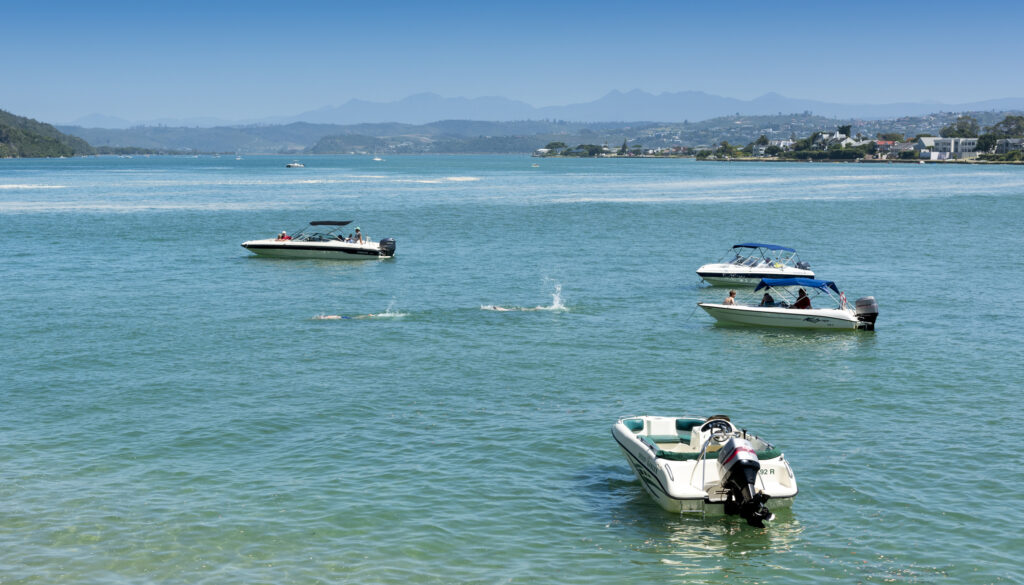
Winter at The Heads has a different atmosphere. It is a time for slow mornings on the deck, quiet walks along the water’s edge, and peaceful low-tide exploring.
There is also a lovely contrast between the energy of the open sea and the stillness of the lagoon. After a morning marine excursion, guests can return to a quieter part of Knysna and settle back into the rhythm of the water.
Whether you are staying slightly elevated above the lagoon or just steps from the sand, The Milkwood Collection offers a calm base away from the busier parts of town.
Plan Your Visit
Whale watching is a popular winter activity. However, sea and weather conditions naturally affect boat trips.
For this reason, we suggest planning your excursion near the beginning of your stay. This gives you more flexibility if conditions change.
The Milkwood Collection is a sheltered base for winter marine adventures. It is close enough to the harbour for an early morning departure, yet tucked away at the edge of the lagoon for a peaceful return.
Check availability for your winter retreat at milkwood.co.za.