
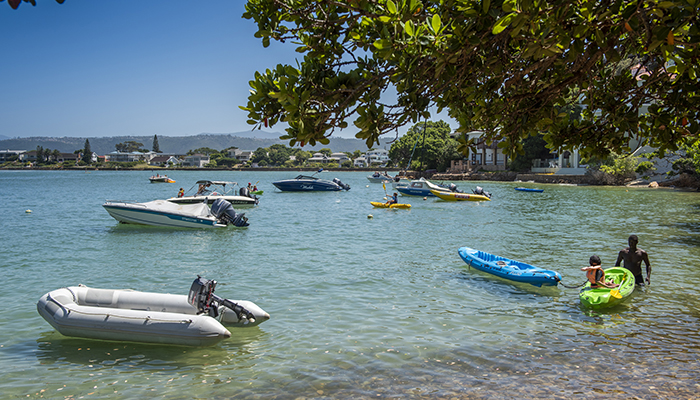
The Knysna Lagoon is one of the Garden Route’s most defining natural features. Calm, ever-changing and closely connected to the sea, it shapes daily life along the water’s edge. Understanding how the lagoon works — particularly the tides — helps you enjoy it with ease and confidence.
Whether you’re paddling, swimming, or walking across to Leisure Isle, here’s what’s helpful to know.
How the Knysna lagoon works
The lagoon is a tidal estuary, influenced by the ocean through the narrow channel at The Heads. As ocean tides rise and fall, so too does the water level in the lagoon.
This movement is gradual and predictable, but noticeable. Over the course of a day, the lagoon can shift from deep water along the shoreline to wide, shallow sandbanks — and back again.
Understanding the tides
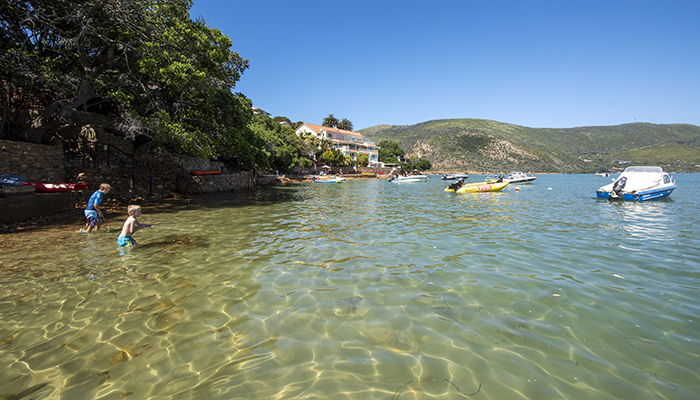
Knysna experiences two high tides and two low tides each day. The full cycle from one high tide to the next takes roughly 12 hours, with the water level changing slowly over several hours in between.
- High tide brings deeper water into the lagoon. This is ideal for kayaking, SUPing and boating, especially close to the shore.
- Low tide reveals wide sandbanks and shallow water, making it possible to wade or walk across the lagoon towards Leisure Isle.
- Turning tides (when the water changes direction) are when movement in the lagoon becomes more noticeable, particularly closer to The Heads.
To plan your day, it’s worth checking local tide times in advance. A reliable and easy-to-use source is:
https://www.tide-forecast.com/locations/Knysna/tides/latest
Walking across the lagoon to Leisure Isle
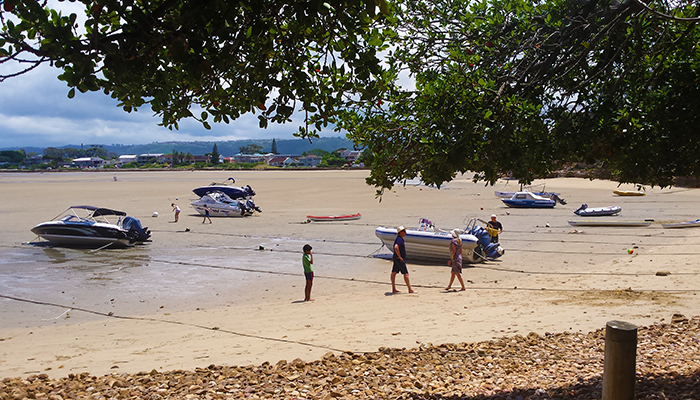
At low tide, the lagoon opens into a broad expanse of sand and shallow channels, and many guests enjoy walking across towards Leisure Isle.
- Aim to cross around low tide, when the water is rising.
- The sand is generally firm and comfortable to walk on barefoot.
- If you plan to continue walking around Leisure Isle itself, you may prefer footwear for the roads and pathways.
- Keep an eye on the water level as you walk — the lagoon can fill in steadily once the tide turns.
If you’re unsure about timing, walking around via the road is always a simple alternative.
Kayaking and SUP on the lagoon
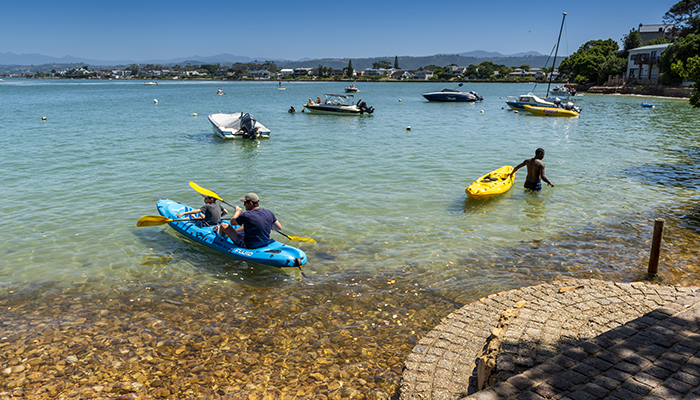
The lagoon is ideal for paddling, especially in the calmer inner sections near The Milkwood Collection.
- Early mornings and late afternoons are often the calmest.
- Stay well inside the lagoon and away from The Heads, where currents can be strong.
- Plan your paddle with the tide in mind, particularly if you’re heading further along the shoreline.
- Take water, sun protection and allow plenty of time to return comfortably.
Swimming in the lagoon
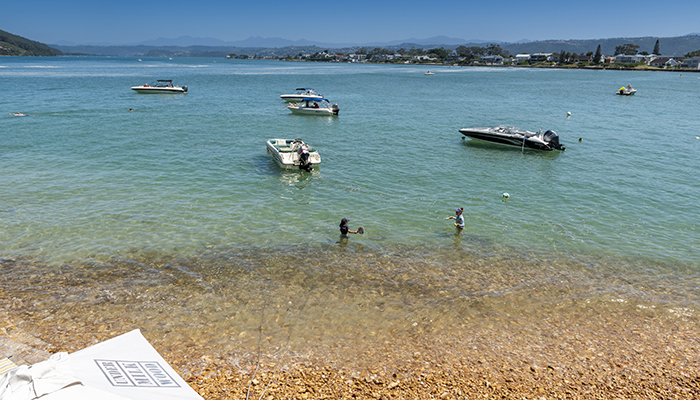
Swimming is popular in sheltered areas of the lagoon, especially at spots like Bollard Bay.
- Choose calm, shallow areas away from channels and boat routes.
- Be mindful of changing water levels as the tide shifts.
- Children should always be supervised, particularly during tide changes.
- Enter and exit the water gradually, as conditions can vary depending on wind and tide.
The Heads: a place to admire from above
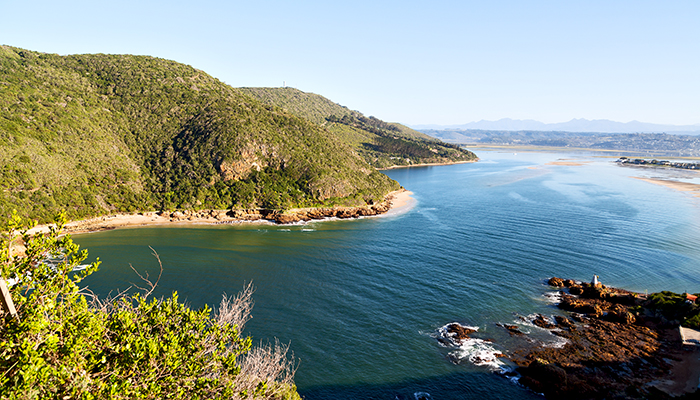
The Knysna Heads are spectacular to look at, but the water below is powerful and unpredictable.
- Strong currents and surge are common.
- Swimming or paddling near the Heads is not recommended.
- Enjoy the area from the viewpoints and walking paths, where it’s safe and scenic.
Enjoying the lagoon with confidence
The Knysna Lagoon requires a cautious awareness, as does all water. However, with a basic understanding of tides and timing, it becomes a place of freedom, calm and quiet adventure.
From sunrise paddles and warm afternoon swims to low-tide walks across open sand, the lagoon sets its own rhythm. Knowing how it moves allows you to relax into that rhythm — and enjoy everything it offers, safely and comfortably.
If you’re ever unsure about conditions or timing, our team is always happy to help.