
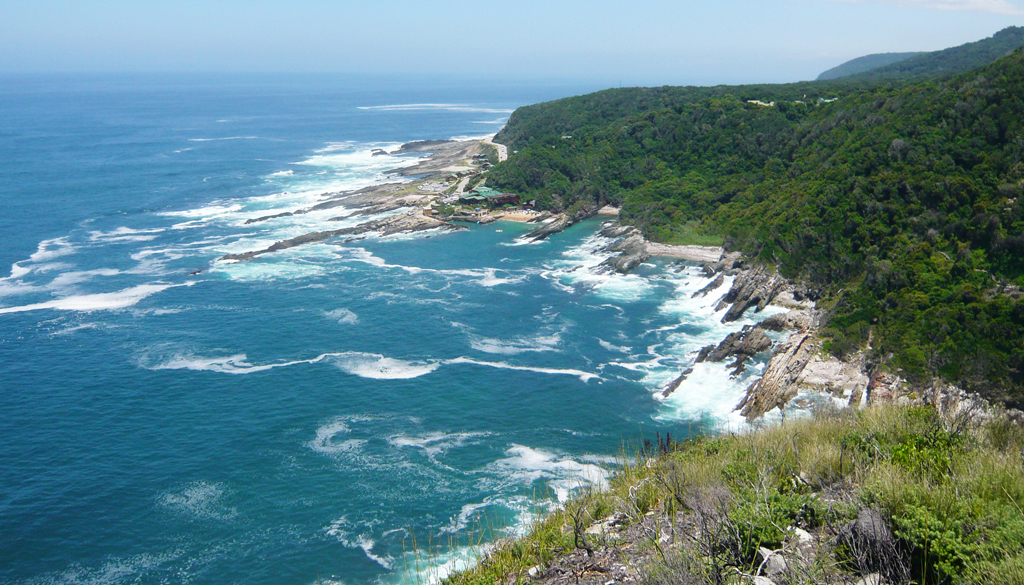
The Garden Route National Park is not one single fenced reserve with one entrance gate. It stretches across a large part of the Garden Route and is managed in three main sections: Knysna, Wilderness and Tsitsikamma.
Each offers something quite different. The Knysna section is the easiest for forest outings close to town. Wilderness is about lakes, rivers, birdlife and forest. Tsitsikamma is further away, with a much more dramatic mix of indigenous forest and rocky coastline.
If you are staying in Knysna, the question is less whether to visit the national park and more which part suits the day you have in mind.
The Knysna section for forest outings close to town
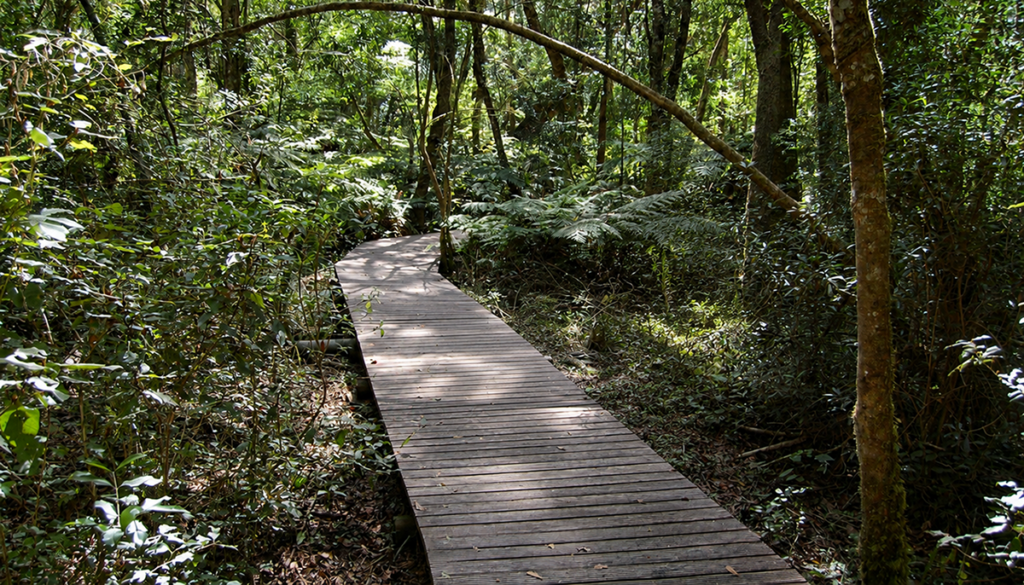
The Knysna section includes several of the park’s best-known forest areas, including Garden of Eden, Diepwalle and Jubilee Creek.
Garden of Eden, about 15 to 17 km east of Knysna on the N2, is one of the easiest options. The forest walk follows wooden boardwalks and bridges through indigenous forest, and there is an accessible route for wheelchair users. It works particularly well if you want a short forest stop rather than a half-day hike.
Further inland, Diepwalle Forest is reached via the R339. The forest complex includes the Diepwalle Big Tree, an Outeniqua yellowwood more than 800 years old, as well as the Forest Legends Museum and several walking routes.
Jubilee Creek is another option in the Knysna forest, with picnic areas beside the creek and a walking route through the old gold-mining area.
These places suit visitors who want to experience the Knysna forest without travelling far from town. They work well for a shorter forest outing, especially if you only have a morning or afternoon free.
Choose Wilderness for rivers, lakes and birdlife
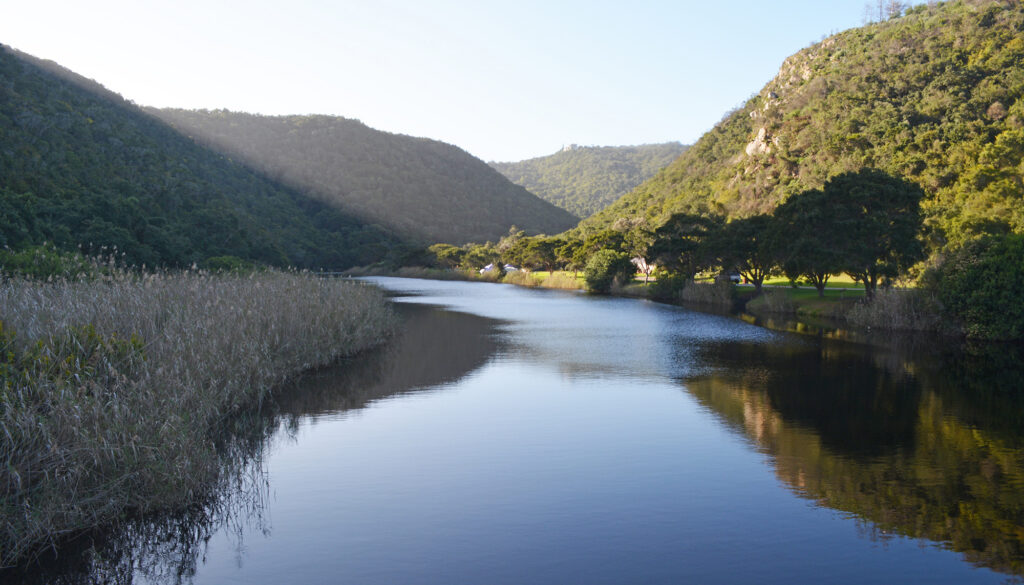
The Wilderness section lies west of Knysna, roughly 45 minutes away by car.
This part of the park protects a network of lakes, rivers, estuaries and forest stretching from the Touw River area towards Swartvlei. It feels quite different from the Knysna forest because water is such a large part of the landscape.
Ebb-and-Flow on the Touw River is a useful starting point. From here, visitors can walk forest trails, spend time beside the river or head out onto the water.
The Wilderness section also has several bird hides around its lakes and wetlands, making it particularly worthwhile for anyone interested in birdlife. The lakes system supports a wide range of waterbirds as well as forest species.
There are longer hikes here too, including the Kingfisher trails, but you do not need to tackle a full trail to enjoy this section. A river outing, bird hide or shorter walk can easily form the basis of a half-day visit.
Choose Tsitsikamma for the most dramatic day trip
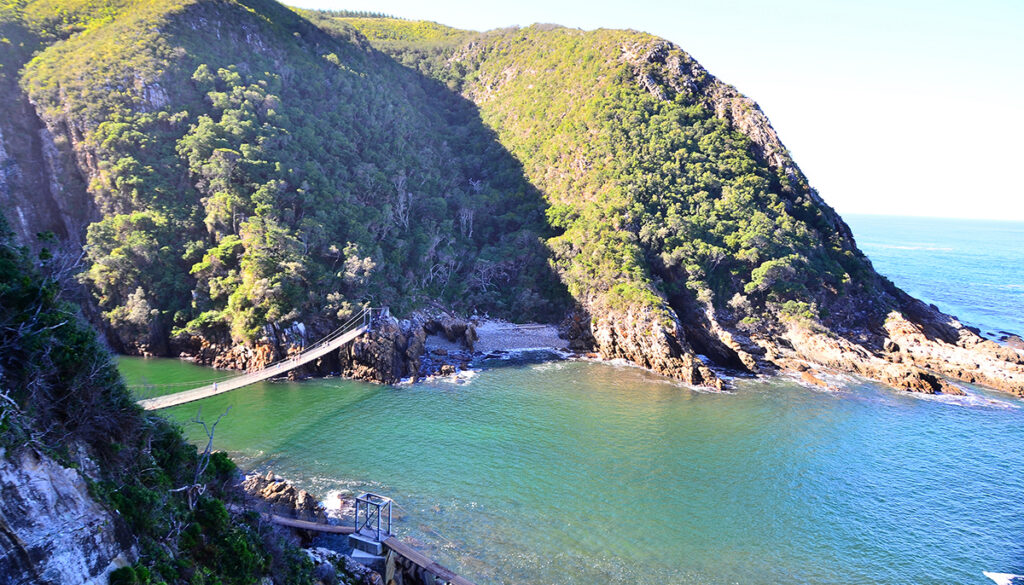
Tsitsikamma is the furthest of the three sections from Knysna, so it makes sense to treat it as a proper day trip.
Storms River Mouth is around 95 km from Knysna, with the drive taking roughly an hour and fifteen minutes before allowing for stops.
This is the section where the indigenous forest meets the rocky coastline most dramatically. The best-known short outing is the Mouth Trail, which leads through the forest to the Storms River suspension bridges.
For stronger walkers, the Waterfall Trail follows the first section of the Otter Trail along the coast. It is a more demanding walk of about three hours return, so check current trail conditions before setting out.
Tsitsikamma also offers marine and adventure activities, including kayak-and-lilo trips into the Storms River gorge and boat trips from the mouth.
Knysna, Wilderness or Tsitsikamma?
If you only have a few hours, stay close to Knysna and visit Garden of Eden, Diepwalle or Jubilee Creek.
For a half-day or relaxed day trip with rivers, lakes and birdlife, head west to Wilderness.
If you have a full day available and do not mind the longer drive, Tsitsikamma offers the biggest change of scenery and the widest range of activities.
A few practical things to know
Garden Route National Park is spread across a large area, so opening times, access arrangements and conservation fees are not necessarily the same everywhere.
Some sites charge daily conservation fees, with different rates for South African residents, SADC visitors and international visitors. Wild Card holders may have conservation fees covered, depending on their membership.
If you are planning a particular trail or forest outing, check the latest SANParks notices before setting off. Trails can occasionally be closed or rerouted after weather damage, maintenance or safety assessments.
It is also worth allowing extra time for forest roads. Diepwalle, for example, is reached partly via the gravel R339, so the journey is slower than the distance alone might suggest.
Before setting out, check the latest opening times, access information and conservation fees on the SANParks Garden Route National Park page.
Planning a summer stay in Knysna? Explore The Milkwood Collection’s self-catering chalets and villas near the Knysna Heads, or contact our team for help choosing the property that best suits your stay.
Featured image by Katrin Lorenzen.